Skip to content
💛 See why our clients rate us 4.9★ Client Reviews & Testimonials    👨‍👩‍👧 Join our Facebook Community for relocation support    👍 Follow Help at Hand Spain for news and updates

How to Move to Spain:
2026 Guide, Requirements & First Steps

Planning a move to Spain? This guide explains the essential first steps, including choosing the right visa or residency route, understanding the main requirements and navigating the practicalities of relocating and settling into life in Spain.

In This Guide: Three Dimensions • Visa & Residency Options • Our Specialisms • Other Routes • Citizenship • Tax, Finances & Business • Start Your Journey • Resource Hub • Frequently Asked Questions

What You Need to Consider When Moving to Spain

A successful move to Spain is about more than choosing the right visa. There are practical decisions to make, a new life to settle into, and plenty to discover along the way. We’ve grouped the essentials into three dimensions to help you see the bigger picture.

Practical Dimension of Moving
PRACTICAL DIMENSION

Planning a move to Spain means understanding the practical requirements from the outset. Visas, residency, documentation, timelines and taxation can all form part of the process. If you plan to stay for more than 90 days, understanding your immigration position and the Schengen 90/180-day rule provides an important foundation for planning your move with greater clarity and confidence.

The Human Dimension of Moving
HUMAN DIMENSION

Moving country is about much more than paperwork. Behind every relocation is a new chapter, with exciting plans, unfamiliar experiences and plenty to learn along the way. Hearing from others who have made the move, sharing practical advice and having a supportive community around you can make the journey feel easier, more reassuring and far less overwhelming.

The Everyday Dimension of Moving
EVERYDAY DIMENSION

Making Spain feel like home comes from understanding the little things as well as the big ones. From healthcare and driving to local customs, Spanish terminology and everyday bureaucracy, there is always something new to discover. Our practical resources help make daily life easier to understand, giving you greater confidence as you settle in and find your feet.

Your Spain Visa & Residency Options (2026)

Moving to Spain starts with one important question: which visa or residency pathway applies to your circumstances?  The answer usually begins with your nationality, whether you are joining a family member, and what you plan to do in Spain. Use the options below to narrow down your route, then explore our pathway summaries and detailed guides for eligibility requirements, timelines and application guidance.

Which Route Applies to You? A quick distinction before you explore the pathways

  • EU/EEA and Swiss citizens follow the EU residence regime, while non-EU citizens generally require a visa or residence authorisation appropriate to their circumstances.
  • Different rules apply to non-EU family members of EU/EEA or Swiss citizens, who may qualify for residence through their family relationship rather than through one of the standard non-EU visa routes.

🌐EU/EEA or Swiss citizen

Moving to Spain for work, self-employment, study, retirement or lifestyle?

👨‍👩‍👧 Joining Family in Spain

If you are a non-EU citizen joining an EU/EEA/Swiss or Spanish family member, a family-based residency route may apply.

🏡 5+ Years in Spain

Lived legally in Spain as a non-EU citizen for five years?

Spanish Visa & Residency Routes We Specialise In

Help at Hand Spain specialises in Spain’s most in-demand visa and residency routes, supporting applications and renewals for non-EU nationals, EU citizens, families, students and long-term residents.  Below you’ll find a quick overview of each pathway, including who it is best suited to, the basic requirements, work rights, family options, where to apply and typical timelines.

For more detailed information, explore our 2026 Spain Visa & Residency Guides using the links provided. If a full guide isn’t yet available for your particular route, simply open an enquiry and we’ll be happy to provide further information tailored to your circumstances.


Already living in Spain? Explore our Visa and Residency Renewal Guides → 

Jump to a residency pathway: 
Non-Lucrative Visa (NLV)  • Digital Nomad Visa (DNV) • Student Visa • EU Citizen Residency • EU/EEA or Swiss Citizen Family • Spanish Citizen Family • Long-Term Residency

Visas for Non-EU Citizens

Non‑Lucrative Visa (Visado de Residencia No Lucrativa)

Non‑Lucrative Visa (NLV) / Visado de Residencia No Lucrativa

  • Best suited to: Retirees, financially independent individuals, or those taking a career break or sabbatical who want to make Spain their home without working.
  • Basic requirement: Sufficient financial means from savings or passive income to support yourself and any accompanying family members, plus qualifying health insurance.
  • Work rights: Does not permit employment or professional activity in Spain.
  • Family members: Your family can apply with you, provided the additional financial requirements are met.
  • Where to apply: From your country of origin, through the competent Spanish Consulate.
  • Timeline: The official decision period is up to three months, although actual processing times can vary depending on the Consulate.
Digital Nomad Visa (Visado de Teletrabajo de Carácter Internacional)

Digital Nomad Visa (DNV) / Visado de Teletrabajo de Carácter Internacional

  • Best suited to: Remote employees working for companies outside Spain and self-employed professionals who work mainly with international clients and want to live and work remotely from Spain. The official route covers third-country nationals carrying out remote employment or professional activity for companies established outside Spain.
  • Basic requirement: A qualifying remote working relationship with an overseas company or clients, together with sufficient income for the applicant and any accompanying family members, and the required qualifications or professional experience.
  • Work rights: Permits qualifying remote employment or professional activity while living in Spain, with different conditions applying to employees and self-employed applicants.Qualifying family members can work in Spain, either as employees or on a self-employed basis.
  • Family members: Qualifying family members can apply to accompany or join the main applicant in Spain.
  • Where to apply: From Spain if legally present, or via the visa route from abroad.
  • Timeline: The official decision period is 20 days from electronic submission. If no decision is issued within this period, the application is deemed approved through positive administrative silence
Student Visa (Visado de Estudios)

Student Visa / Visado de Estudios

  • Best suited to: International students undertaking qualifying higher education or other eligible studies in Spain, including certain qualifying Spanish-language courses.
  • Basic requirement: Admission to a qualifying study programme, sufficient financial means for the applicant any accompanying family members, and appropriate health insurance, together with the other applicable immigration requirements.
  • Work rights: For higher-education students, employment and self-employment can be permitted alongside their studies, subject to the applicable conditions and compatibility with the study programme. Different rules apply to other categories of study.
  • Family members: For higher-education studies, qualifying family members can accompany or join the student in Spain. This can include a spouse, registered or stable partner, and eligible children, subject to the relevant requirements and additional financial means.
  • Where to apply: Normally through the competent Spanish Consulate from abroad. In certain cases, including qualifying higher education, an application can be made from within Spain where the applicant is legally present.
  • Timeline: Applications should normally be submitted at least two months before the start of the studies. Processing times can vary depending on the application route and competent authority.
 

Moving to Spain as an EU Citizen or Non-EU Family Member

EU Citizen Residency (Certificado de Registro de Ciudadano de la Unión)

EU Citizen Residency / Certificado de Registro de Ciudadano de la Unión

  • Best suited to: EU/EEA and Swiss citizens who want to make Spain their home for more than three months, whether for work, study, retirement or lifestyle.
  • Basic requirement: Depending on your circumstances, you will generally qualify through employment or self-employment, study, or by demonstrating sufficient financial means and appropriate health cover.
  • Work rights: EU/EEA and Swiss citizens can live and work in Spain under free-movement rules, including as employees or self-employed workers.
  • Family members: Qualifying family members can accompany or join you in Spain, including family members who are not themselves EU/EEA or Swiss citizens. The qualifying relationships and requirements depend on the circumstances, with specific rules applying to students and their families.
  • Where to apply: In Spain, by registering with the Central Register of Foreign Nationals through the relevant Foreign Nationals Office or police station.
  • Timeline: The application must be made within three months of entering Spain, and the registration certificate is issued immediately upon registration.
 
Non‑EU Family of EU Citizen (Tarjeta de Residencia de Familiar de Ciudadano de la Unión)

Non‑EU Family of EU Citizen / Tarjeta de Residencia de Familiar de Ciudadano de la Unión

  • Best suited to: Non-EU family members who are accompanying or joining an EU/EEA/Swiss citizen living in Spain, including spouses, partners, children and other qualifying relatives. The exact family relationships covered depend on the circumstances.
  • Basic requirement: Proof of the qualifying family relationship and that the EU/EEA/Swiss citizen meets the relevant conditions for residence in Spain, for example through employment, self-employment, study, or sufficient financial means and health cover.
  • Work rights: Full work rights, including employment and self-employment.
    Family relationship: Qualifying relationships can include a spouse or registered partner, children and, in certain circumstances, dependent parents and other qualifying family members.
  • Where to apply: In Spain
  • Timeline:The official decision period is two months, although actual processing times can vary depending on region. The application should be submitted within three months of entering Spain.
 
Non‑EU Family of Spanish Citizen (Tarjeta de Residencia de Familiar de de ciudadano español)

Non‑EU Family of Spanish Citizen / Tarjeta de Residencia de Familiar de de ciudadano español

  • Best suited to: Non-EU family members who want to join or live in Spain with a qualifying Spanish family member.
  • Basic requirement: Proof of the qualifying family relationship and any additional conditions that apply to that particular relationship, such as dependency or evidence of a stable partnership where required.
  • Work rights: Full work rights, including employment and self-employment.
  • Family relationship: This route can include spouses, registered or qualifying stable partners, children and, subject to the applicable conditions, parents and other qualifying relatives. The current Spanish rules specifically recognise both registered partners and stable, duly proven partnerships.
  • Where to apply: In Spain or, depending on the applicant's circumstances and qualifying family relationship, from a Spanish Consulate abroad.
  • Timeline: The official decision period is two months, although actual processing times can vary depending on region.The application should be submitted within three months of entering Spain.
 

Long-Term Residency for Non-EU Citizens

Long‑Term Residency (Residencia de Larga Duración)

Long‑Term Residency / Residencia de Larga Duración

  • Who's it for: Non-EU citizens who have lived legally and continuously in Spain for five years.
  • Basic requirement: Five years of legal and continuous residence in Spain. Absences generally cannot exceed six consecutive months or 10 months in total during the five-year qualifying period. Where absences are for work-related reasons, up to 18 months in total may be permitted. Duly justified absences due to force majeure may also be considered on an individual basis.
  • Work rights: Full work rights in Spain, including employment and self-employment. National Long-Term Residency allows you to reside and work in Spain indefinitely under the same conditions as Spanish nationals.
  • Where to apply: In Spain.
  • Timeline:Processing times vary.
  • Ideal for:People who have established their lives in Spain and want the security of indefinite residence with full work flexibility.
  • Family members of EU/EEA or Swiss citizens: Those who do not yet qualify for permanent residence may be able to continue under the EU family-member residence regime, subject to the applicable requirements.
  • National or EU Long-Term Residency: Spain offers both National and EU Long-Term Residency. The EU version has additional eligibility requirements and may be worth considering if greater mobility within the EU is important to your future plans.
 

Other Spanish Visa & Residency Routes

Spain offers a wide range of immigration pathways under both the general immigration law and the Ley 14/2013 framework. Below are additional visa and residency categories you may encounter; there may be other specialised residency authorisations. Help at Hand Spain only provides services for the options shown above.

  • Spanish Residency for EU Long-Term Residents (Residencia de larga duración-UE en España para residentes de larga duración-UE en otro Estado miembro de la Unión Europea)
  • Highly Qualified Professional Visa (Residencia para Profesionales Altamente Cualificados / PAC)
  • Intra‑Company Transfer Residence Permit (Residencia por Traslado Intraempresarial / ICT)
  • Family Reunification (Reagrupación Familiar)
  • Entrepreneur Visa (Visado de Emprendedor)
  • Temporary Residence and Work Permit for Employment (Autorización de residencia temporal y trabajo por cuenta ajena)
  • Self‑Employed (Autónomo) Visa (Visado de Residencia por Cuenta Propia)
  • Arraigo / Residence due to Exceptional Circumstances (Residencia por Circunstancias Excepcionales)
  • Researcher Residence Permit (Autorización de Residencia para Investigación)
  • Residence Permit for Internships / Traineeships (Autorización de Residencia para Prácticas)

From LONG-TERM Residency to Spanish Citizenship

For many people, obtaining residency in Spain is the first step in a much longer journey. Depending on your circumstances and how long you have been legally resident in Spain, you may eventually become eligible to apply for Spanish citizenship (Nacionalidad Española).

  • 10 years: The general qualifying period for Spanish citizenship by residence.
  • 5 years: A reduced qualifying period applies to applicants who have obtained refugee status.
  • 2 years: Nationals by origin of Ibero-American countries, including most Spanish-speaking Latin American countries and Brazil, can benefit from a significantly reduced two-year qualifying period. The same period also applies to nationals by origin of Andorra, Portugal, the Philippines and Equatorial Guinea.
  • 1 year: A one-year qualifying period applies in several specific circumstances, including certain people born in Spain and, subject to the statutory requirements, those married to a Spanish citizen.
Reaching the relevant qualifying period does not automatically grant Spanish citizenship. It means you may be eligible to apply. The qualifying residence must be legal, continuous and immediately prior to the application, and applicants must also meet the requirements for good civic conduct and integration.

If you are interested in applying for Citizenship we can introduce you to a lawyer in our partner network.

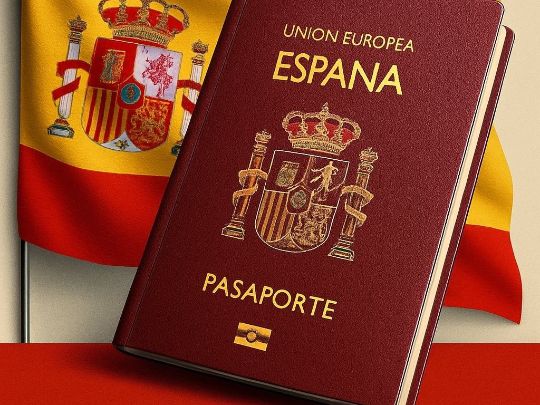
Spanish Flag and Passport

Understanding Tax & Financial Matters in Spain 

🧾 spanish Tax ResidencY

Relevant to everyone moving to Spain, whether working, retiring or not working.

Spanish tax residency is commonly associated with the 183-day rule, but this is not the only consideration. Your personal circumstances, including where your economic interests are centred, can also be relevant.

If you become Spanish tax resident, your worldwide income and wider financial circumstances may need to be considered under Spanish tax rules. 

Depending on your circumstances, your basic obligations may include filing an annual Spanish income tax return (Modelo 100) and, where applicable, reporting certain assets and rights held outside Spain under Modelo 720


💶 Your Finances

Particularly relevant if you have assets or income outside Spain

If you have property, investments, pensions, savings or other assets outside Spain, it is worth considering how becoming Spanish tax resident could affect them.

There may also be Spanish reporting obligations relating to certain overseas assets. Planning before you move can be important, particularly if you are considering selling property, realising investments or making other significant financial decisions. 


💼 Working or Running a Business

Relevant if you intend to continue working after moving to Spain.

If you plan to work from Spain, additional tax and social security considerations may apply. This is particularly important if you are self-employed, work for an overseas company, or own or manage your own limited company.

Your personal position may change, and if you manage an overseas company from Spain there may also be matters relating to the company itself that should be reviewed.

We strongly recommend obtaining professional Spanish tax advice before relocating if you are self-employed or own your own company.

HELP AT HAND SPAIN SERVICES

✅ Planning Your Move to Spain?

The Road to your life in Spain

You’ve explored the main visa and residency pathways for moving to Spain. The next step is deciding how you want to approach your application and what level of support feels right for you.

Relocating to Spain is exciting, but navigating the requirements, documentation and administrative process can sometimes feel daunting. Having a clear plan from the beginning can make the journey considerably easier.

Whether you would like professional support with your Spanish visa or residency application, or prefer to manage the process yourself with reliable guidance, Help at Hand Spain is here to help you move forward with greater clarity and confidence, at a pace that works for you.

SPANISH RESOURCE HUB

Your free go‑to guide for everyday life in Spain — from driving and healthcare to taxes, language learning, and local essentials, all in one easy‑to‑navigate place.

  • Facts, Culture & Everyday Spain: Explore Spain’s population, cities, regions, airports, culture, traditions and public holidays, plus our Spain Glossary & Jargon Buster for those all-important Spanish terms and acronyms.
  • Language & Integration: Resources for learning Spanish, understanding the culture and settling into your local community.
  • Healthcare: Understand public and private healthcare, registering with a doctor and health insurance options in Spain.
  • Tax & Finance: Get to grips with Spanish taxation, banking and managing your finances while living in Spain.
  • Driving in Spain: Learn about exchanging or obtaining a Spanish driving licence, vehicle registration and insurance basics.
  • Schools: Guidance on choosing and enrolling in schools in Spain, from public and concertado schools to private and international options.
  • Relocating with Pets: Practical advice for bringing your pets to Spain and helping them settle comfortably into their new home.
  • Spanish e-Government & Digital Certificate: Understand Spain’s online government services and how the Digital Certificate can help you access them.

The Help At Hand Spain Resource Hub - everyday resources for moving to and living in Spain.

Thinking About Moving to Spain?

Imagine Your Life in Spain

Imagine the lifestyle, opportunities and experiences that could come with making Spain your home. Watch our short video for a little inspiration, and discover how Help At Hand Spain can support you along the way.

This video has sound, you need to click the unmute button to hear it!

Questions About Moving to Spain

Do I need a visa to move to Spain?

It depends on your nationality and circumstances. EU/EEA citizens have free-movement rights but may need to register as residents for longer stays. Non-EU citizens generally need the appropriate visa or residence authorisation if they intend to live, work or study in Spain. Spanish Ministry of Inclusion: Living in Spain

Which Spanish visa or residency option is right for me?

The right visa or residency route depends on factors including your nationality, whether you intend to work or study, the source of your income, and whether you are joining family in Spain. Available routes include residence without working, international remote working, employment, study, family and other residence categories. Spanish Ministry of Inclusion: Living in Spain International Mobility Residence Applications

How much money do I need to move to Spain?

There is no single amount that applies to everyone. Financial requirements depend on the visa or residency route and, in some cases, the number of family members included. For example, Spain's Non-Lucrative Residence route requires the main applicant to demonstrate monthly financial means equivalent to 400% of the IPREM, plus 100% of the IPREM for each accompanying family member. Spanish Ministry of Inclusion: Non-Lucrative Residence

Can I work in Spain?

Your right to work depends on your nationality and immigration status. EU citizens benefit from EU free-movement provisions, while non-EU nationals need a residence status that permits the type of work they intend to carry out. Some residence routes do not permit employment or professional activity, while others are specifically designed for employment, self-employment or international remote work.

Do I need private health insurance to move to Spain?

It depends on your immigration or residency route and your entitlement to healthcare in Spain. Some routes specifically require qualifying public or private health insurance. For example, Spain's Non-Lucrative Residence authorisation requires public or private health insurance with an insurer authorised to operate in Spain.

What documents do I need for a residency application in Spain?

This depends on the type of residency, but most applications require proof of income, health insurance, a valid passport, and evidence of your address in Spain. You’ll receive a personalised checklist so nothing is missed.   If you are applying for residency directly within Spain, then it's really important to start the process 2-3 months before your date of arrival in Spain.

Do foreign documents need to be translated or apostilled for Spain?

Some do, some don’t. You’ll be advised exactly which documents require a sworn translation or apostille so you don’t spend money unnecessarily.

How long does the residency process in Spain usually take?

Timelines vary by application type. You’ll receive realistic expectations based on current processing trends.

What do I need to do after arriving in Spain?

The steps depend on your nationality and residence route. Depending on your circumstances, you may need to complete your residence formalities and obtain the appropriate residence documentation. It is therefore important to check the requirements for your specific authorisation rather than following a one-size-fits-all arrival checklist. Don't forget there will be other practical things you need to consider as well. For example, registering your entitlement for Public Health Care and registering at the Local Medical Centre, and exchanging your Driving Licence if you are eligible.

What is the difference between an NIE and TIE?

The NIE (Número de Identidad de Extranjero) is your foreigner identification number in Spain. The TIE (Tarjeta de Identidad de Extranjero) is the physical Foreigner Identity Card issued where applicable to document a foreign national's status in Spain. They are therefore not interchangeable: the NIE is the identification number, while the TIE is a physical identity/residence document.

Do you help with Spanish bureaucracy beyond residency?

Yes — including padrón registration, social security, tax, and other administrative processes that can be confusing for newcomers.Visit our Services Page for further information.
We use cookies to personalize content, provide social media features and to analyse our traffic.