
Click on each of the topics below to learn more and find useful resources.
Schengen 90/180-Day Rule: How Long Can I Stay in Spain?
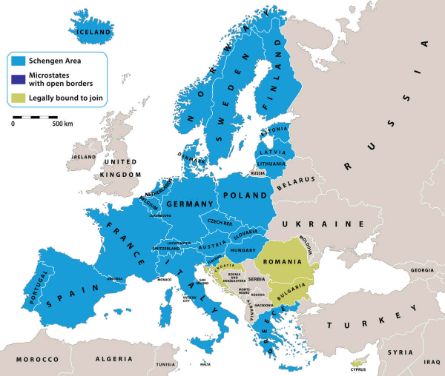
The Schengen Area allows travel between participating European countries without routine internal border controls. It currently comprises 29 countries, including Spain.
For many non-EU nationals visiting Spain and other Schengen countries, the key rule is 90 days in any 180-day period. Some nationalities require a Schengen visa for a short stay, while others can travel visa-free, but the 90/180-day limit can still apply. For the latest rules and visa requirements, check the European Commission’s Schengen Visa Policy.
If you are planning to live in Spain rather than simply visit, different immigration and residence rules apply. EU citizens have rights under EU free-movement rules, while different provisions can apply to non-EU family members accompanying or joining an EU citizen. You can check the official Your Europe guidance for non-EU family members for further information.
Not sure how your days add up? The European Commission provides an official Schengen Short-Stay Calculator to help check whether a short stay complies with the 90/180-day rule.
This article was last updated in September 2026.
HOW CAN HELP AT HAND SPAIN HELP?
For stays longer than 90 days, such as for studying, working, or living in a Schengen country such as Spain, you must apply for a national visa specific to that country, not a Schengen visa.
How can Help At Hand Spain help?
We have a range of services for Visas, Residencies and other services to help you move to Spain successfully. For further information Review Our Services and feel free to Open a New Enquiry.
Why choose Help At Hand Spain?
- Clear and transparent pricing before you commit
- Overcome the language barrier
- Leverage our experience and patience to overcome the bureaucracy
- We will guide you through every step of the process
- You can leverage our knowledge and network of trusted partners
- We understand how daunting things can be, we are here to make it easier
- Share sensitive documents in confidence and securely using a client specific password protected folder
Who Does the Schengen 90/180-Day Rule Apply To?
This includes, for example:
- British nationals
- US, Canadian and Australian nationals travelling visa-free
- Nationals who hold a valid short-stay Schengen visa
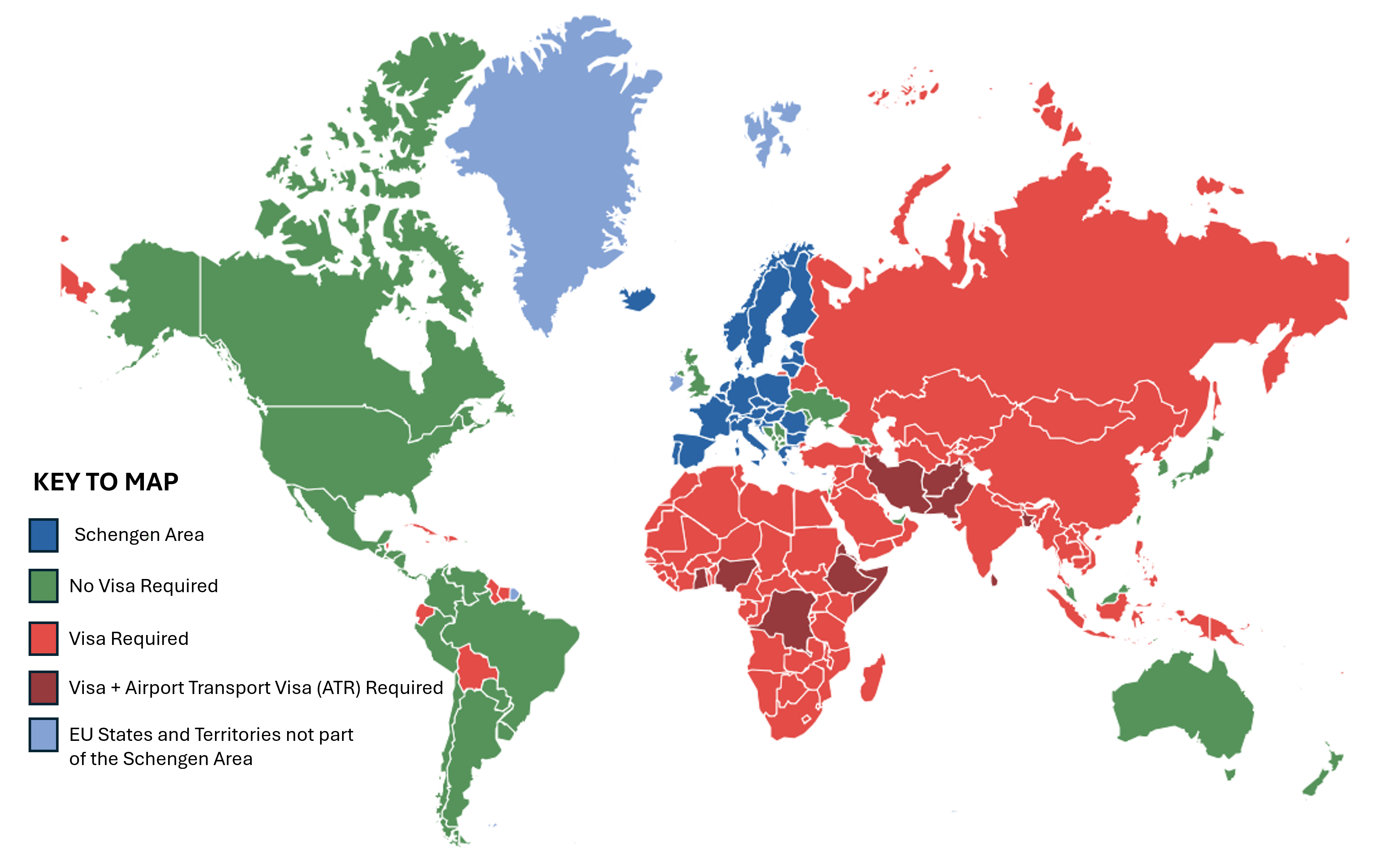
Do I Need a Schengen Visa to Visit Spain?
Importantly, not needing a Schengen visa does not mean the 90/180-day rule does not apply. Visa-exempt visitors can still be limited to stays of up to 90 days in any 180-day period.
Check whether you need a Schengen visa →
How Does the Schengen 90/180-Day Rule Work?
For example, if you spend 30 days in Spain, 30 days in France and 30 days in Italy within the relevant 180-day period, you have used your 90-day allowance.
The 180 days are calculated on a rolling basis. For each day of your stay, you look back over the previous 180 days and calculate how many days you have spent in the Schengen Area. Your total must not exceed 90 days.
This means that leaving the Schengen Area does not automatically reset your allowance. Your available days change as earlier days of travel fall outside the rolling 180-day period.
Not sure how your days add up? Check your stay with the official Schengen Short-Stay Calculator Use the official European Commission calculator.
Travelling With an EU Citizen Family Member
Special EU free-movement rules can apply when a non-EU family member accompanies or joins an EU citizen in another EU country.
Under the conditions set out in EU free-movement rules, qualifying non-EU family members may not be subject to the normal overall Schengen 90/180-day limitation when accompanying or joining the EU citizen. However, the position depends on the circumstances, including where the EU citizen is travelling or residing and whether the non-EU family member is travelling with or joining them.
Different rules can apply when travelling to the EU citizen’s own country of nationality, where national immigration rules may apply, or when the non-EU family member travels independently.
If staying in another EU country for longer than three months, residence formalities may also apply.
TRAVELLING WITHIN THE SCHENGEN ZONE
The Schengen Area currently comprises 29 countries, allowing travellers to move between participating countries without routine internal border controls.
For the purposes of the 90/180-day calculation, your days are counted across the Schengen Area as a whole, not separately for each country.
For example, spending 30 days in Spain and then 30 days in France counts as 60 Schengen days, not 30 days in each country with independent allowances.
Important: A Schengen visa and the Schengen Area are not the same thing. Some travellers need a visa to enter for a short stay, while others are permitted to travel visa-free but are still subject to the 90/180-day rule.
NEW REQUIREMENTS TO VISIT EUROPE -
ENTRY EXIT SYSTEM (EES) &
EUROPEAN TRAVEL INFORMATION AND AUTHORISATION SYSTEM (ETIAS)
Entry/Exit System (EES)
The Entry/Exit System (EES) is the EU's automated system for registering non-EU nationals travelling for short stays across the external borders of the European countries using the system.
As of 10 April 2026, EES is fully operational. It electronically records information including travel-document data, biometric data and the date and place of entry and exit. For travellers registered in EES, the system replaces manual passport stamping and helps identify overstays automatically. Entry/Exit System (EES)
European Travel Information and Authorisation System (ETIAS)
ETIAS is not yet operational. It will be a travel authorisation system for visa-exempt non-EU nationals travelling to participating European countries. The European Union states that applications are not currently being collected and that the launch date will be officially communicated before implementation. Smart Borders
Check the latest EES and ETIAS information on the official EU Travel Europe website →
REMOTE WORK ON A SCHENGEN TOURIST VISA
If you intend to live in Spain and work remotely on a longer-term basis, it is important to consider your immigration position before travelling.
Spain has a specific immigration route for qualifying international remote workers. Whether it is appropriate will depend on your nationality, employment or professional circumstances and the nature of your remote work.
Explore our Spanish Digital Nomad Visa & Remote Working Guide →
Can a Short Stay or Schengen Visa Be Extended?
Short stays in the Schengen Area are normally subject to the applicable authorised period of stay. In exceptional circumstances, it may be possible for a Schengen visa holder to request an extension. The rules and procedure depend on the traveller's circumstances, so you should not assume that simply wanting to remain in Spain for longer will qualify for an extension.
What Happens If I Overstay the 90/180-Day Limit?
If you are subject to the Schengen 90/180-day rule, it is important to keep track of your permitted stay. Remaining in Spain or elsewhere in the Schengen Area beyond your authorised period can mean that you are no longer legally staying under the short-stay rules.
The EU’s Entry/Exit System (EES) electronically records entry and exit information for non-EU nationals travelling for short stays and is designed to help identify travellers who have exceeded their authorised stay. Entry/Exit System
The consequences of an overstay will depend on the individual circumstances and the applicable national rules. For that reason, if you believe you have overstayed, or circumstances outside your control may prevent you from leaving within your permitted period, it is sensible to seek advice on your particular situation rather than assuming that leaving and returning will resolve the issue.
Immigration Status and Tax Residency Are Different
Your immigration status and Spanish tax residency are separate issues. The Schengen 90/180-day rule determines the permitted length of a short stay; it should not be used as a test of whether you are, or are not, tax resident in Spain.
If you are spending substantial periods of time in Spain or considering making Spain your home, it is important to consider your immigration, residency and tax position separately and obtain appropriate professional advice where necessary.
Not sure how many Schengen days you have remaining?Check your permitted stay using the official EU calculator →
Visa & Residency Options for Living in Spain
If you’re planning to stay in Spain for more than 90 days, the right visa or residency pathway will depend on your nationality, personal circumstances and what you intend to do in Spain.
Our Getting Started Guide brings together the main visa and residency routes and helps you understand which pathways may be relevant to your circumstances.
Explore Visa & Residency Pathways in our Getting Started Guide →